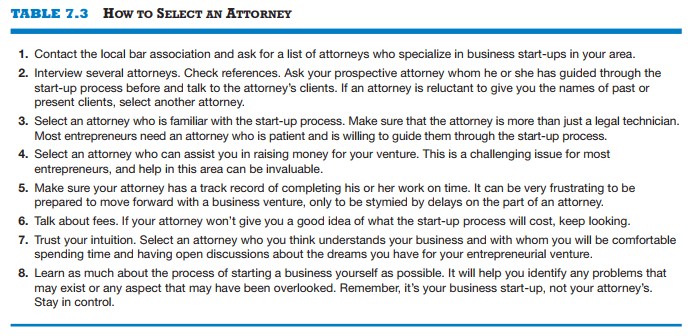
Entrepreneurs often object to the expense of hiring an attorney when there are many books, Web sites, and other resources that can help them address legal issues on their own. However, these alternatives should be chosen with extreme caution. Many attorneys recognize that start-ups are short on cash and will work out an installment plan or other payment arrangement to get the firm the legal help it needs without starving it of cash, as was the case with XploSafe. This is particularly true if the attorney senses that the new venture has strong commercial potential and may develop into a steady client in the future. There are also ways for entrepreneurs to save on legal fees and to increase the value of their relationship with their attorney. Here are several ways for entrepreneurs to achieve these dual objectives:
1. Group together legal matters: It is typically cheaper to consult with an attorney on several matters at one time rather than schedule several separate meetings. For example, in one conference, a team of start-up entrepreneurs and their attorneys could draft a founders’ agreement, decide on a form of business organization, and discuss how to best draft nondisclosure and noncompete agreements for new employees.
2. Offer to assist the attorney: There are excellent resources available to help entrepreneurs acquaint themselves with legal matters. An entrepreneur could help the attorney save time by writing the first few drafts of a founders’ agreement or a contract or by helping gather the documents needed to deal with a legal issue.
3. Ask your attorney to join your advisory board: Many start-ups form advisory boards. Advisory board members typically serve as volunteers to help young firms get off to a good start. An attorney serving on an advisory board becomes a coach and a confidant as well as a paid service provider. However, entrepreneurs must be careful not to give the impression that the attorney was asked to serve on the advisory board as a way of getting free legal advice.
4. Use nonlawyer professionals: Nonlawyer professionals can perform some tasks at a much lower fee than a lawyer would charge. Examples include management consultants for business planning, tax preparation services for tax work, and insurance agents for advice on insurance planning.
© Entrepreneurship, Successfully Launching New Ventures