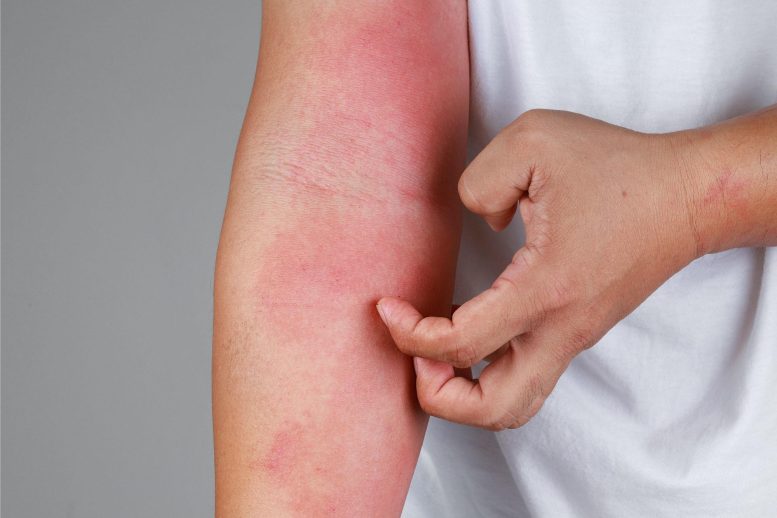
Research from Yale School of Medicine indicates a strong link between air pollution levels and eczema prevalence in the U.S.
The study found that residents in high PM2.5 areas are twice as likely to develop eczema, suggesting significant health implications of air pollution on skin conditions.
PM2.5 refers to tiny particles in the air that measure less than 2.5 micrometers in diameter—about 30 times smaller than a human hair. These particles, often from sources like vehicle emissions, industrial processes, and wildfires, can penetrate deep into the lungs and enter the bloodstream, posing risks to respiratory and cardiovascular health.
A new study published in the journal PLOS ONE has found that people living in areas with higher air pollution are more likely to have eczema. Led by Dr. Jeffrey Cohen of Yale School of Medicine, the study explores the potential environmental impact of industrialization on skin health.
Eczema rates have been rising globally alongside industrial growth, hinting at a possible link to environmental factors. Using data from the U.S. National Institutes of Health’s All of Us Research Program, which includes information from hundreds of thousands of U.S. adults, the study focused on 286,862 people with available demographic details, zip code, and health records.
The analysis showed that 12,695 participants (4.4%) had been diagnosed with eczema. After accounting for demographics and smoking status, researchers found that people with eczema were more likely to live in areas with high levels of PM2.5, a type of fine particulate matter in the air. Notably, for every 10 µm/m³ increase in PM2.5 pollution, the likelihood of having eczema more than doubled.
Overall, 12,695 participants (4.4%) were diagnosed with eczema. After controlling for demographics and smoking status, people with eczema were more likely to live in zip codes with high levels of fine particulate matter, or PM2.5, in the air. For every increase of 10 µm/m3 in average PM2.5 air pollution in their zip code, people were more than twice as likely to have eczema.
The authors conclude that increased air pollution, as measured by PM2.5, may influence the risk of developing eczema, likely through its effects on the immune system.
The authors add: “Showing that individuals in the United States who are exposed to particulate matter are more likely to have eczema deepens our understanding of the important health implications of ambient air pollution.”